


Quick answer: P2BAD is a generic diesel fault code meaning “NOx exceedance, root cause unknown”. The engine control unit has measured more NOx at the tailpipe than it should, and it couldn’t pin the excess on a specific fault. Treat it as a result, not a diagnosis: the real cause usually shows up as another code stored alongside it, in the AdBlue dosing, a NOx sensor, the fluid itself or the EGR side. Clearing it only resets the warning. Check the AdBlue first, then get every stored code read with live data. Our mobile diagnostic visit is £185, included in the price if the full fix goes ahead on the day. For eligible off-road, export or motorsport vehicles only (it is not lawful on vehicles used on public roads, and we check eligibility first), our software fix starts from £249 with a lifetime warranty.
Last updated: 26 October 2026
P2BAD tends to turn up with an engine management light, an AdBlue or emissions warning, and sometimes a countdown or reduced power. Depending on the scan tool you’ll see it written as “NOx exceedance” or “NOx exceedence”, with or without “root cause unknown”, and some manufacturers add their own wording on top. This guide explains what the code is really telling you, what to check yourself, and how to get it sorted without paying for parts you didn’t need. If your dash shows a message rather than a code, start with AdBlue system fault messages explained.
What does P2BAD mean?
A diesel with AdBlue (SCR) has to police its own NOx output. NOx sensors either side of the SCR catalyst report how much NOx is going in and coming out, and the engine control unit compares that against a legal limit. When the output stays too high, it logs a “NOx exceedance” code and, if the fault isn’t fixed, starts the warning and countdown sequence that ends in reduced power or a no-start.
The last part of the code says what the system thinks caused the excess. On most vehicles using the generic definitions:
- P2BA7: NOx exceedance, empty reagent (AdBlue) tank.
- P2BA8: NOx exceedance, interruption of reagent dosing.
- P2BA9: NOx exceedance, insufficient reagent quality.
- P2BAC: NOx exceedance, deactivation of EGR.
- P2BAD: NOx exceedance, root cause unknown.
So P2BAD is the catch-all: NOx went over the limit and the system couldn’t attribute it to any of the specific causes it checks for. You may see P2BAD described elsewhere as an EGR code; the EGR version is P2BAC. Exact definitions can vary between manufacturers, which is why we read the code with the manufacturer’s own description as well as the generic one.
Why doesn’t P2BAD tell you which part has failed?
Because it isn’t measuring a part. It’s measuring the outcome: too much NOx at the tailpipe. Anything that stops the SCR system cleaning the exhaust properly can produce that outcome, and so can a sensor that’s reading wrongly. That’s why a P2BAD on its own is never a reason to order a catalyst, a pump or a sensor. The useful information is in the codes stored with it and in the live readings.
What can cause a P2BAD code?
These are the areas a proper diagnosis works through. They’re listed in the order we’d check them, not by how often they happen, because that varies from vehicle to vehicle:
- The AdBlue itself. Old, contaminated or diluted fluid can’t do its job. Quality codes such as P207F may be stored with it.
- Dosing. A crystallised or blocked injector, or a pump that can’t hold pressure, means too little AdBlue reaches the exhaust. Look for codes like P20E8, P204F or P2047 alongside. Our guide to P20E8 and P204F pressure codes covers these.
- A NOx sensor reading wrongly. If a sensor drifts, the “exceedance” it reports may not be real. Sensor codes such as P2200, P229F or U029D point this way. See P229F and P2201 NOx sensor codes.
- Catalyst efficiency. P20EE with P2BAD means the system has also judged the catalyst to be under-performing, which is often a dosing or sensor problem underneath. See P20EE fault code explained.
- The EGR side. EGR also controls NOx, so EGR faults can push NOx up even when the AdBlue system is healthy.
- Wiring, connectors and power supply. A damaged loom, corroded plug or blown fuse can upset the sensors or the dosing.
- Software. Some vehicles have manufacturer software updates or recalls covering emissions faults, so it’s worth checking.

What should I check before booking?
A few minutes of checks can save you a visit, and they make any diagnosis quicker:
- Write down the exact dash message and any miles left on a countdown. A photo of the dash is ideal.
- Check the AdBlue level and, if it’s low, top up with fresh AdBlue from a sealed container. Never add water or anything else to the tank.
- Tell us if the wrong fluid has gone in. Don’t keep driving on it; the tank may need draining first, which any garage can do.
- Drive normally for a while after a top-up. Some vehicles only re-check the system over a drive cycle, so the warning may not update straight away.
- Check for recalls. Use the GOV.UK vehicle recall checker or ask a franchised dealer whether any emissions software update applies to your vehicle.
- Get every stored code read, not just P2BAD, with the freeze-frame data, and don’t let anyone clear them before they’ve been looked at.
If the warning is still there after those checks, the fault is in the system rather than the fluid. If you can’t clear the warning after a refill, our guide to an AdBlue warning that won’t clear after a refill covers the next steps.
Will clearing the code fix P2BAD?
No. A code clear turns the light off until the system runs its checks again, and then P2BAD comes back, because nothing that caused the excess NOx has changed. Clearing also wipes the freeze-frame data that helps find the fault, and on many vehicles it won’t stop a countdown that has already started.
Can I keep driving with P2BAD?
Often for a while, but don’t rely on it. A NOx exceedance is exactly what the warning and countdown system is there to act on, and once a countdown reaches zero the engine may not restart. Our guide to the AdBlue no-start countdown explains how it works. Get it diagnosed while there are still miles left.
Is P2BAD different on a Transit, Sprinter, Range Rover or VW?
The code means the same thing on each: NOx over the limit, cause not attributed. What changes is the dash wording, which other codes get stored with it, and how the countdown is shown. That’s why we diagnose on the vehicle rather than going by the code alone. For model-specific advice, see our pages on the Ford Transit, Mercedes Sprinter, Range Rover and Land Rover (and what to check on a Range Rover AdBlue warning), and Volkswagen.
How do you fix a P2BAD code?
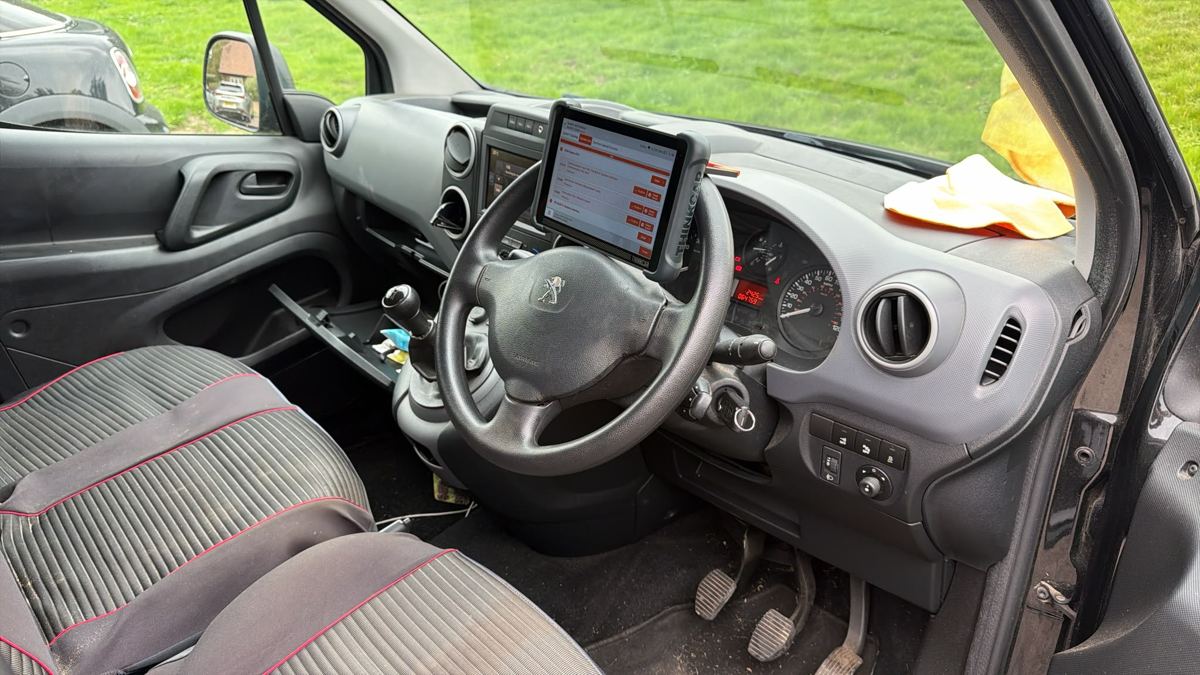
We start with a mobile diagnostic visit, £185. We come to your home, workplace or depot, read the codes stored across the vehicle’s control modules with their freeze-frame data, and test the system live: NOx sensor readings, dosing pressure, AdBlue quality and the heater. You get written findings and control module resets, and the £185 is included in the price if the full fix goes ahead on the day.
What happens next depends on what we find:
- If it’s the fluid, wiring, a connector or a part that needs fitting, we tell you. We don’t fit, clean or replace parts, but the written findings tell your garage exactly where to look.
- If the vehicle is eligible, we offer a software solution, such as an AdBlue delete, SCR delete or NOx sensor delete, from £249. We save your original ECU file first, the fix is permanent unless you ask us to reverse it, and it carries our lifetime warranty.
There’s no deposit: you pay after the job, and if we can’t fix it, you don’t pay for the fix. Our AdBlue delete cost page explains what moves a quote within our range.
| Service | Our price | Notes |
|---|---|---|
| Diagnostic visit | £185 | Included in the price if the full fix goes ahead on the day |
| Full fix | From £249 | Carried out at your vehicle, with our lifetime warranty |
| Most jobs | £249 to £450 | Where your quote lands depends on the vehicle and the work needed |
| Bespoke or very distant jobs | Quoted separately | Priced individually before any work starts |
| Deposit | None | You pay after the job |
| ECU unlocking, if your vehicle needs it | Quoted separately | Confirmed before any work starts |
Removing or disabling emissions equipment, including the AdBlue/SCR system, is not permitted on vehicles used on public roads and can affect your MOT, insurance and compliance. Deletes are carried out for off-road, motorsport, competition and export vehicles, and we check vehicle and use eligibility before any software work. Read is an AdBlue delete legal in the UK? before deciding.
Do you come out to P2BAD faults in London?
Yes. We cover all of London, with no extra charge for London jobs, plus Surrey, Sussex, Kent and the surrounding areas, from our base in Copthorne near Crawley. We work 8am to 8pm, 7 days a week, at homes, workplaces and depots, and same-day visits are usually possible. Jamie has 15 years in the trade, and we carry public liability insurance. Send your registration and postcode and we’ll confirm when we can attend. The full list of towns is on our areas covered page.
Got a P2BAD code? Get a fixed quote with your registration, the code and the exact dash message. Or call 0207 046 1823 (London and Kent), 01483 963253 (Surrey), 01293 366085 (West Sussex), 01273 950316 (Brighton and East Sussex), or WhatsApp 07403 415966.
P2BAD fault code: frequently asked questions
P2BAD means NOx exceedance, root cause unknown. The engine control unit measured more NOx at the tailpipe than the limit allows and couldn’t attribute it to a specific fault, so the cause has to be found with a proper diagnosis.
It needs sorting rather than ignoring. A NOx exceedance can lead to an AdBlue countdown, reduced power and, once the countdown reaches zero, an engine that may not restart.
Only until the system runs its checks again. Clearing doesn’t fix the cause, it wipes the freeze-frame data that helps find it, and on many vehicles it won’t stop a countdown.
Yes. If a NOx sensor is reading wrongly, the exceedance it reports may not be real. That’s why we test the sensor readings live before anything else is decided.
Our mobile diagnostic visit is £185, included in the price if the full fix goes ahead on the day. For eligible off-road, export or motorsport vehicles our software fix starts from £249, and most jobs are £249 to £450. Bespoke or very distant jobs are quoted separately.
No. We diagnose, and for eligible vehicles we offer a software solution. If a part, wiring or the fluid is the cause on a road vehicle, we tell you and a garage can put it right using our written findings.
About the author. Written by Mobile AdBlue Fix, a mobile AdBlue, NOx and SCR specialist based near Gatwick and covering London, Surrey, Sussex and Kent. We diagnose with manufacturer-level equipment before recommending anything, check vehicle and use eligibility before any software work, save your original ECU file, and back our work with a lifetime warranty. How our warranty works.
Related Articles

U029D and U029E Fault Codes: Lost Communication With a NOx Sensor
U029D means the engine control unit has lost contact with NOx sensor A (U029E is sensor B). Why it isn't always the sensor, what both codes…
Read article
P207F Fault Code: AdBlue Quality Warning Explained
P207F means the engine control unit doesn't trust the AdBlue quality. Why it isn't always bad fluid, the codes it comes with, what to check yourself…
Read article
AdBlue No Start Countdown in Croydon: What to Do
An AdBlue no start countdown in Croydon? Learn what triggers it, why refills don't clear it, and how a mobile ECU fix sorts it at your…
Read article