


If your diesel keeps throwing AdBlue warnings, a countdown to “no engine start”, or limp mode, you’ve probably come across the term AdBlue delete. It’s one of the most searched-for diesel fixes in the UK — but the explanations online are often vague or full of jargon. Here’s what it actually means.
What an AdBlue delete actually is
Modern diesels use a Selective Catalytic Reduction (SCR) system that injects AdBlue (a urea solution, also called DEF) into the exhaust to reduce NOx emissions. When that system develops a fault — a failing NOx sensor, a blocked injector, a tired pump or poor-quality fluid — the car protects itself with warning lights, a mileage countdown and ultimately limp mode or a no-start.
An AdBlue delete is an ECU software change that reconfigures how the engine manages the SCR system, so those fault triggers are cleared at source. There’s no mystery box or dashboard tape — it’s done through the vehicle’s diagnostic port with manufacturer-level tools.
What it fixes
- Persistent AdBlue warning lights that return after topping up
- The “no engine start in X miles” countdown
- Limp mode triggered by SCR/NOx faults
- Repeated, expensive sensor and dosing-module replacements
We always diagnose the underlying fault first, so we know exactly what’s causing the problem rather than guessing.
Do I still need to add AdBlue?
No. Once the system no longer relies on AdBlue to run, there’s nothing to keep topping up. That’s a big part of why people choose a removal over a string of repairs.
AdBlue delete vs repair vs bypass
People use these terms loosely. In practice: a repair diagnoses and clears the fault; a delete reconfigures the ECU so it’s gone for good; a bypass focuses on clearing the countdown so you’re not stranded. We’ll advise the right option for your vehicle and situation.
How the mobile process works
- Send your registration, postcode and a description of the warning.
- We confirm the likely fault and a price — usually within the hour.
- A technician comes to your home, work or roadside, diagnoses and applies the fix on the spot.
Most jobs are done in 1–2 hours and every fix is backed by our 100% guarantee and lifetime warranty.
Is it right for me?
If you’re caught in a loop of AdBlue faults and dealer bills, it’s worth a quick chat. We cover Sussex, Surrey, Kent and London and give honest advice — even if that’s “top it up and see”. Send your details for a fast quote and we’ll point you the right way.
Related Articles
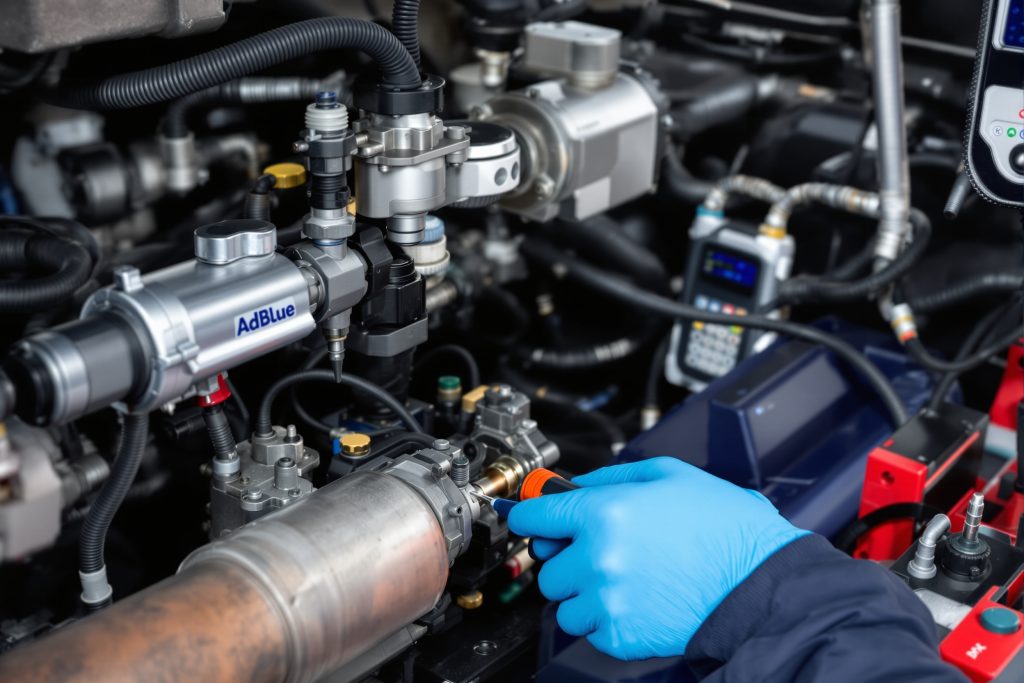
P20E8 and P204F: When AdBlue Pressure and Dosing Go Wrong
P20E8 (pressure too low) and P204F (system performance) explained — crystallisation, pumps and injectors, what a proper diagnosis looks like and the fix options.
Read article
P229F, P2200 and P2201: NOx Sensor Codes Decoded
The NOx sensor code family explained — which sensor each code points at, why they fail in pairs, and when replacement stops making sense.
Read article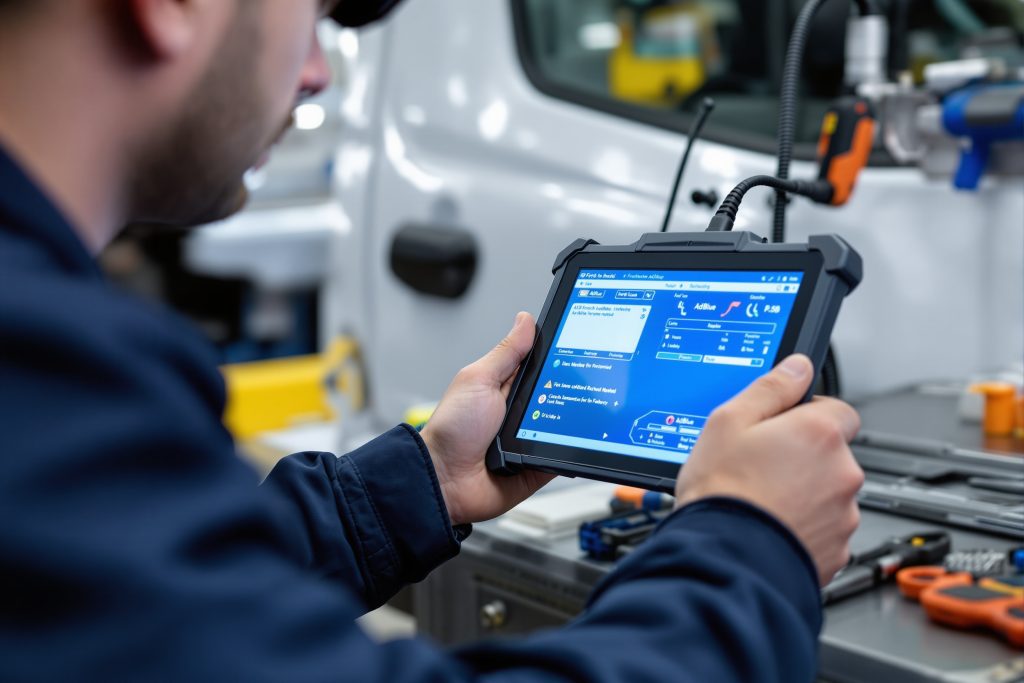
P20EE Fault Code: What It Really Means and How It Gets Fixed
P20EE means the SCR catalyst isn't cleaning NOx the way the ECU expects. What's actually behind it, why the part swap so often fails, and the…
Read article